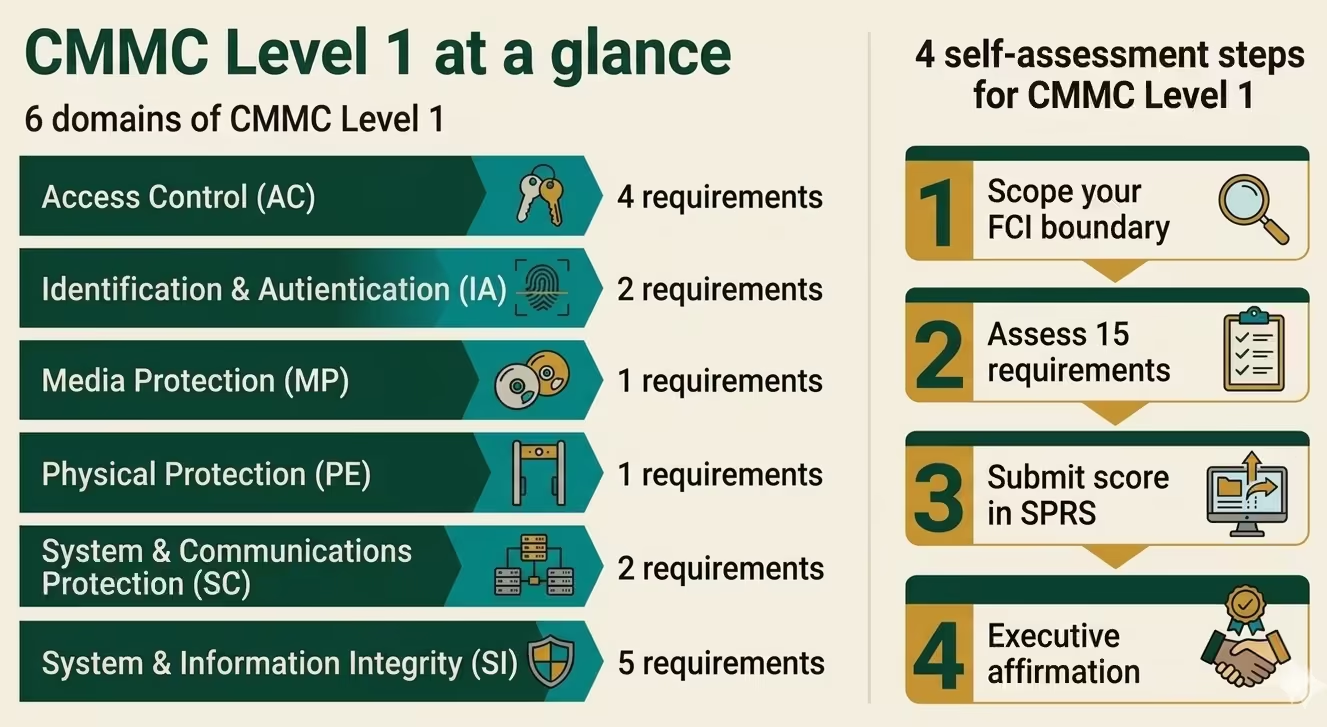
Picking the right partner for CMMC is one of the most consequential decisions a defense contractor will make this year. The provider you choose shapes how prepared you are, how your assessment goes, and whether you walk away certified or holding a list of deficiencies.
Get it wrong, and you risk missed deadlines, wasted budget, and lost contract eligibility. This article walks through exactly what to look for.
Start by Understanding the Two Roles You’re Actually Hiring For
The first thing to get straight: readiness and assessment are two separate jobs. They cannot be done by the same company.
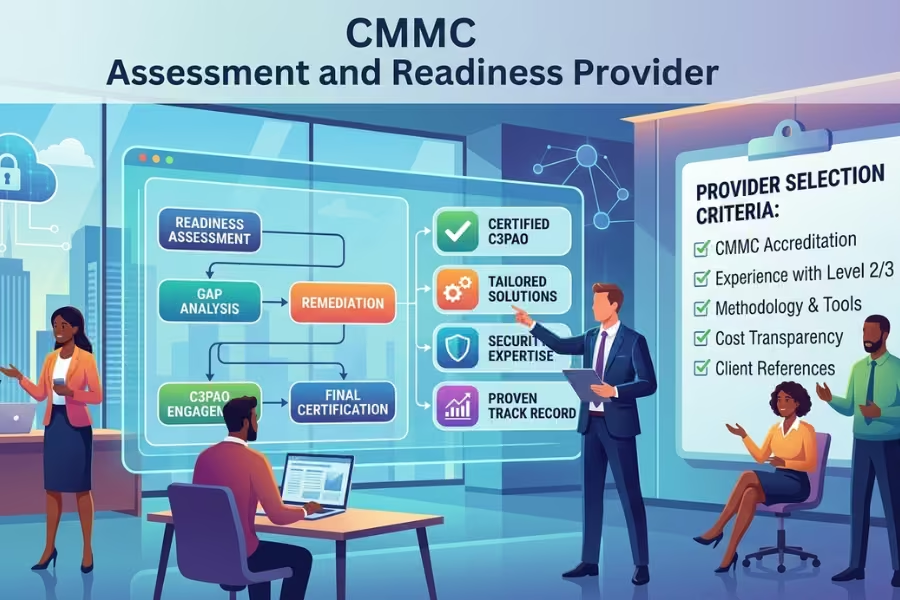
A readiness provider, often a Registered Practitioner Organization (RPO), helps you prepare. They run gap analyses, scope your CUI environment, write your System Security Plan, and guide remediation. A C3PAO (Certified Third-Party Assessment Organization) does the formal certification assessment. The official audit determines whether you meet the CMMC Level 2 requirements.
These roles are firewalled by regulation. A C3PAO cannot assess an organization that it previously consulted, advised, or helped implement controls for. This prohibition is codified under 32 CFR Part 170, and assessment team members must sign a Conflict of Interest Attestation before any engagement begins. The reason is simple. No assessor can objectively grade work they helped produce.
So when you set out to choose a provider, you are really running two searches. One for readiness. One for assessment. Plan for both from the start.
Verify Authorization Before Anything Else
For your C3PAO, the single non-negotiable check is authorization status. Only organizations listed on the Cyber AB Marketplace are authorized to conduct CMMC Level 2 assessments. The Cyber AB, the Department of Defense’s accreditation partner, maintains this list at cyberab.org.
Do not rely on a company’s own claims. Some firms describe themselves as “C3PAO candidates” or say they are in the final stages of authorization. Until they appear on the Marketplace as authorized, they cannot certify you. Confirm the listing yourself.
Also, confirm the credentials of the individual assessors. The CMMC Assessment Process requires each assessment team to include a lead Certified CMMC Assessor and a separate quality assurance CCA who sits outside the assessment team. Ask whether the C3PAO has enough CCA staff to maintain that separation, and check that team members hold active credentials in good standing.
What to Look for in a Readiness Provider
Readiness is where most of your time and money go. The C3PAO audit fee typically represents only 20 to 30 percent of the total certification cost. Remediation and technology upgrades are the larger line items. A strong readiness provider can save you far more than they cost by steering you away from expensive missteps.
Look for a few specific things.
- First, a real CUI scoping experience. The size of your assessment scope drives the size of your bill. A good provider helps you design an enclave that minimizes the systems subject to CMMC controls. That single decision can cut your costs dramatically.
- Second, defense sector depth. CMMC sits atop DFARS and NIST SP 800-171. A provider who has only done generic IT security work will struggle with the 110 controls and 320 assessment objectives. Ask how many DoD contractors they have taken through readiness.
- Third, a structured method. You want a provider who delivers a documented roadmap, not vague advice. Ask to see a sample gap report or scoping document. Detail up front means fewer surprises later.
- Fourth, honesty about timelines. Readiness work commonly takes a year or more for organizations starting from scratch. Be wary of anyone promising certification in a few weeks unless your environment is already mature.
What to Look for in a C3PAO
For the assessment itself, your evaluation criteria shift.
Capacity is the biggest operational risk in 2026. Demand for assessments far exceeds the supply of authorized C3PAOs. Industry data shows scheduling can stretch from four weeks to six months or more, depending on demand. C3PAO scheduling capacity is the single largest scheduling risk contractors face right now. Ask any prospective C3PAO about their current availability and book early.
Methodology matters too. Ask how the firm handles scoping, what their assessment team size is (most run 2 to 4 assessors), and how long the on-site portion takes (typically 3 to 5 days). A C3PAO that provides a detailed scope up front is less likely to surprise you with “found” assets and added cost mid-assessment.
Consider continuity. CMMC certification lasts three years, but compliance is ongoing, and reassessment follows. A C3PAO with stable teams and consistent methodology makes your next cycle easier.
One thing a C3PAO cannot do during your assessment: tell you how to fix things. They can mark a control “Not Met,” but they cannot recommend specific tools or remediation steps for a client they are assessing. If a firm offers to both assess and fix, treat that as a red flag rather than a convenience.
Related: How to Choose a C3PAO for Your CMMC Assessment
Watch the Conflict-of-Interest Line Carefully
The separation between consulting and assessment is strict, and the rules reach further than many contractors expect.
Under 32 CFR 170.9, every C3PAO must comply with the Accreditation Body’s Conflict of Interest policies and the CMMC Code of Professional Conduct, and must meet the impartiality requirements of ISO/IEC 17020:2012. A C3PAO cannot objectively assess an environment it helped build, so it cannot serve as both your consultant and your assessor.
The Code of Professional Conduct requires the C3PAO itself to identify and manage conflicts before the assessment begins. That responsibility cannot be handed off to the assessment team or to you, the contractor. Both parties can raise a conflict, and any agreed-upon mitigation must be documented.
The restriction also covers affiliate arrangements. Using a “sister company” to consult while a related company assesses is a conflict unless there is a verifiable, enforceable firewall between the two entities. Ask any provider directly how they manage this. If their answer is vague, keep looking.
The cleanest approach is the simplest one. Hire one firm for readiness. Hire a different, unrelated firm for the assessment. Confirm there is no shared ownership or staff overlap between them.
Budget With Realistic Numbers
Pricing varies widely, and you should understand the ranges before you talk to anyone.
Independent estimates place Level 2 C3PAO assessment fees in a broad range, with total Level 2 certification costs (preparation, assessment, and technology) commonly running from $50,000 to well over $200,000, depending on size and starting maturity. The Department of Defense’s own estimates put the cost near $105,000 for a small entity’s Level 2 certification assessment. Several analysts also expect assessment fees to climb through late 2026 as demand outpaces C3PAO capacity.
Two budgeting points are worth holding onto. The biggest cost driver is gap remediation, so organizations with a mature security posture spend far less. And choosing a C3PAO purely on the lowest quote often backfires, because a weak scoping process can add cost and risk later.
Timing the Two Engagements
Sequence matters. Engage your readiness provider first and give the work enough runway. Industry guidance suggests booking your C3PAO engagement 8 to 12 weeks before your deadline, and given current capacity constraints, starting your C3PAO search even earlier is wise.
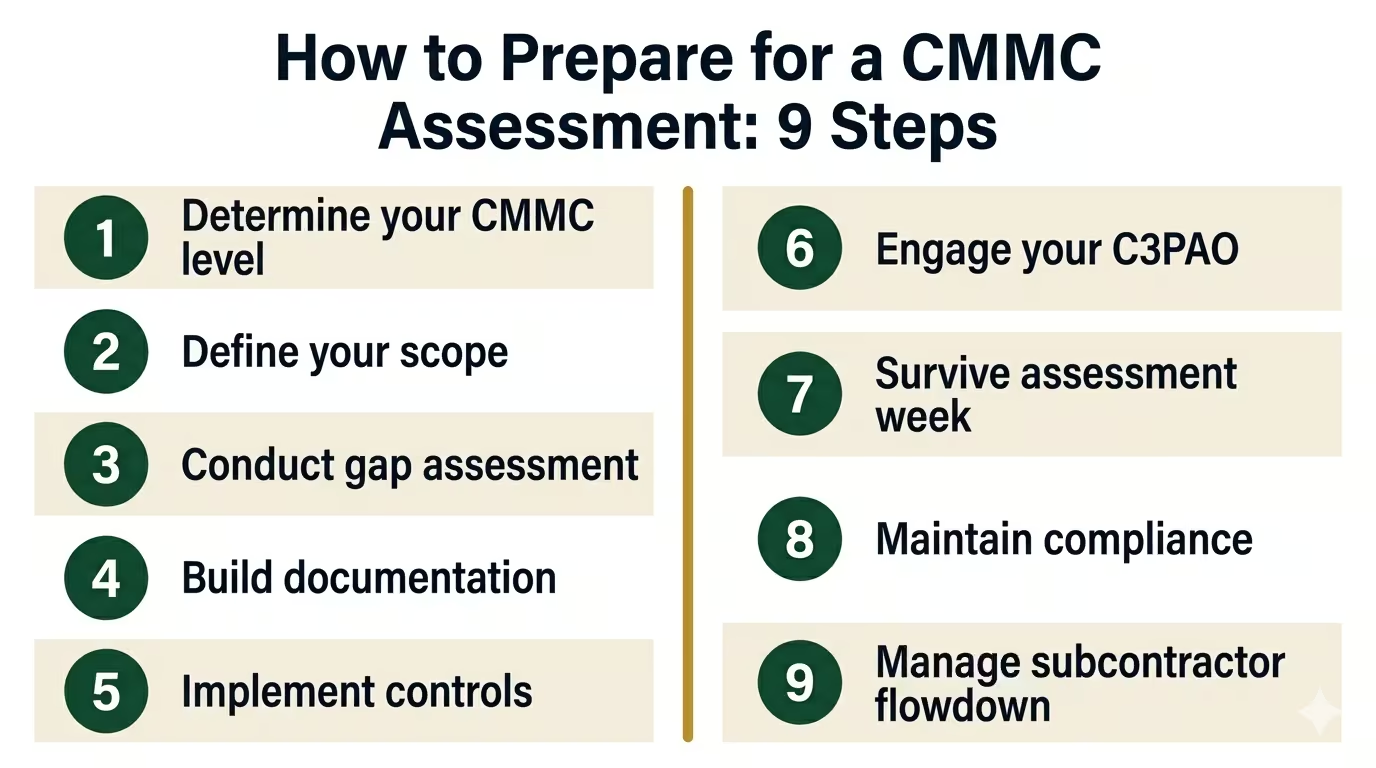
A practical order looks like this: scope your CUI environment, run a gap assessment, remediate, document, collect evidence over a meaningful period, then run an internal or mock readiness review.
Only after that should the formal C3PAO assessment happen. Plan the separation between your readiness firm and your C3PAO from day one so you are not scrambling to find an independent assessor late in the process.
A Short Checklist Before You Sign
Before committing to any provider, confirm the following.
- For your C3PAO: they are listed and authorized on the Cyber AB Marketplace; they have CCA staff sufficient for a separate quality assurance reviewer; they have availability that fits your deadline; and they have no consulting history with your organization in the past three years.
- For your readiness provider: they have genuine DoD contractor experience; they deliver a documented scoping and gap roadmap; they are realistic about timelines; and they are a separate entity from your chosen C3PAO, with no shared ownership.
Run both searches early. Verify everything yourself. The contractors who start evaluating providers now, instead of waiting until a contract deadline forces the issue, are the ones who will certify on time and keep their place in the defense supply chain.