If you handle Controlled Unclassified Information for the Department of Defense, you’ve probably hit the term C3PAO. It stands for CMMC Third-Party Assessment Organization. It’s the entity that decides whether your business passes a CMMC Level 2 certification assessment.
That decision carries real weight. A passing assessment keeps you eligible for DoD contracts. A failed one can lock you out. So picking the right C3PAO isn’t paperwork. It’s one of the most consequential calls you’ll make in your CMMC journey.
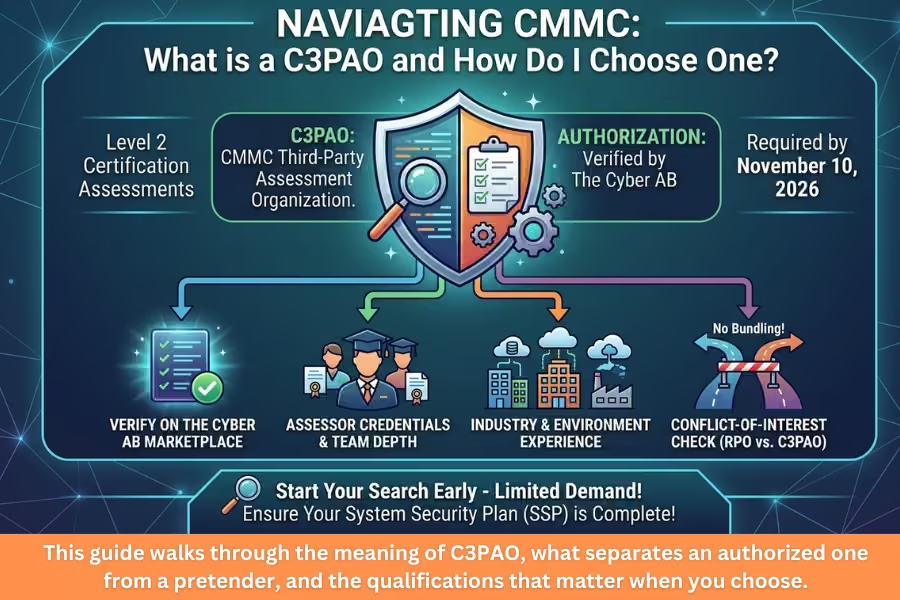
This guide walks through the meaning of C3PAO, what separates an authorized one from a pretender, and the qualifications that matter when you choose.
What is a C3PAO?
A C3PAO is an independent organization authorized by the Cyber AB to conduct official CMMC Level 2 certification assessments. The Cyber AB is the nonprofit body that the DoD appointed to govern the entire CMMC ecosystem.
Only a C3PAO can certify that your cybersecurity practices meet CMMC Level 2. Self-attestation is enough for Level 1. It’s also enough for some Level 2 contracts. But when a solicitation calls for a Level 2 certification assessment, a C3PAO is the only path.
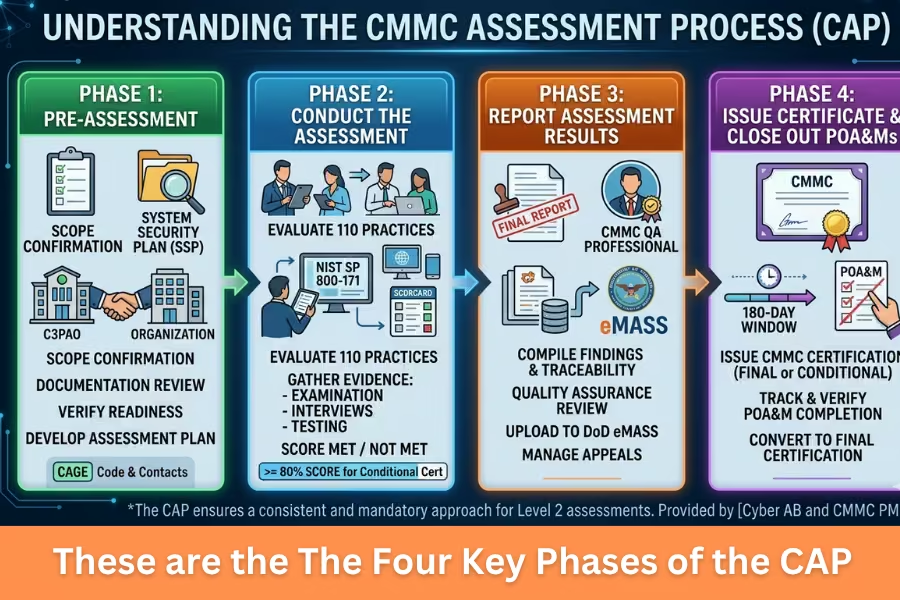
Here’s the core function. A C3PAO sends a team of assessors to evaluate whether you’ve implemented all 110 security requirements in NIST SP 800-171. They examine your evidence, interview your staff, and test your systems. Then they score each requirement and document the results.
One distinction trips people up. A C3PAO is the organization. The people who conduct the actual assessments are CMMC-Certified Assessors, or CCAs. A C3PAO employs or contracts these assessors. We’ll come back to CCAs shortly, because their credentials matter when you choose.
How a C3PAO Becomes Authorized
This is where the answer to “how do I choose one” really begins. Authorization is hard to get, and that difficulty is your first filter.
To earn authorized status, an organization must clear a demanding set of requirements. According to Cyber AB’s C3PAO Authorization Requirements, a C3PAO must successfully complete a DIBCAC Level 2 assessment and then repeat it every 3 years. DIBCAC is the Defense Industrial Base Cybersecurity Assessment Center, the government’s own assessment arm.
Think about what that means. Before a C3PAO can assess you, the government assesses them. They have to meet the same Level 2 standard they’ll hold you to.
There’s more. A C3PAO must receive a non-disqualifying eligibility determination from a Foreign Ownership, Control, or Influence review conducted by the Defense Counterintelligence and Security Agency. That review also repeats every three years. They must pass an annual business background check. They must sign and follow the current Cyber AB agreement.
The Cyber AB’s Accreditation Requirements add another layer. A C3PAO must achieve ISO/IEC 17020 accreditation within 27 months of authorization. ISO/IEC 17020 is the international standard for bodies that perform inspections.
The takeaway for you is simple. An authorized C3PAO has already proven its own security and integrity. That’s not a marketing claim. It’s a regulatory fact.
Step One: Verify They’re Actually Authorized
Never take an assessor’s word for it. The single most important verification step is checking the Cyber AB Marketplace.
The Marketplace is the official, public directory of authorized C3PAOs. The Cyber AB holds exclusive authority from the DoD to authorize these organizations and maintain this list. If a company claims C3PAO status but isn’t in the Marketplace, that claim is false.
The supply is limited, which makes this check more urgent. Demand for assessments far outstrips the number of authorized C3PAOs. Their calendars often book months out. Start your search early, because the right assessor may not be available on your timeline.
Step Two: The Qualifications That Actually Matter
Authorization gets a C3PAO onto your shortlist. These next factors decide who belongs at the top of it.
- Assessor credentials and team depth. A C3PAO must have at least three CCAs on staff or under contract. One serves as a Lead CCA. Another handles quality assurance. The CCA credential itself is demanding. Under 32 CFR 170.11, a CCA must hold the Certified CMMC Professional credential, carry at least three years of cybersecurity experience and one year of assessment experience, and complete a Tier 3 background investigation. Ask who will lead your assessment and confirm their credentials in the Marketplace.
- Relevant industry and environment experience. A C3PAO that has assessed companies like yours will read your environment faster and more fairly. Ask whether they’ve worked with organizations of your size and in your sector. If you run a complex cloud setup, this matters even more. Confirm they understand platforms like Microsoft 365 GCC High, which many defense contractors rely on for CUI.
- A track record prior to the rule taking effect. Some C3PAOs conducted Joint Surveillance Voluntary Assessments before CMMC became mandatory. Those were shared assessments run alongside DIBCAC. A C3PAO with that history has hands-on experience spotting real gaps in real defense environments.
- Clear pricing and honest timelines. A trustworthy C3PAO gives you transparent pricing with no hidden fees. Be cautious of vague cost structures or shifting deadlines that come without documented reasons.
Step Three: The Conflict-of-Interest Rule You Cannot Ignore
This is one of the most important aspects of choosing a C3PAO because getting it wrong can invalidate your certification.
A C3PAO cannot assess an organization that it also consulted. The firm that helped you prepare cannot be the firm that certifies you. This separation is deliberate. The DoD and Cyber AB built it into the ecosystem to keep certifications objective.
The distinction is between two roles. A Registered Provider Organization, or RPO, provides consulting and remediation help. It gets you ready. A C3PAO performs the official assessment. The two cannot be the same organization for the same client.
So a major warning sign is a C3PAO that “guarantees” you’ll pass, or one that bundles consulting and assessment for your company in a way that blurs that line. A legitimate C3PAO manages conflicts of interest carefully. It often asks for your sign-off on the assigned Lead CCA to maintain transparency in the process.
One practical note. A C3PAO can offer a readiness or “mock” assessment as a separate service. That’s different from full remediation consulting. If you use the same firm for a mock assessment and the real one, ask them directly how they maintain that boundary.
Why the Right Choice Matters Right Now
The timing pressure is real. The DoD’s final DFARS rule took effect on November 10, 2025, starting a phased rollout. During Phase 1, most contracts call for self-assessments, though some solicitations may already require a Level 2 C3PAO assessment.
Phase 2 changes the picture. Beginning November 10, 2026, the requirement for Level 2 C3PAO certification assessments starts appearing in applicable solicitations and contracts. That’s the date contractors are watching.
If you’ll need a C3PAO assessment, now is the time to find one. Authorized assessors are limited, schedules are tight, and a failed assessment costs you contract eligibility.
Where the Right Preparation Fits
The way you prepare shapes your assessment. A C3PAO scores what it finds. It doesn’t fix gaps for you. So you want to walk in with your System Security Plan complete, your evidence mapped to each of the 110 controls, and your team ready for interviews.
Start by verifying any C3PAO you consider against the Cyber AB Marketplace. Confirm their assessors’ credentials. Ask about their experience with companies like yours. And keep the consulting-assessment line clean. Get those steps right, and the assessment becomes a milestone you’ve prepared for, not a hurdle you’re hoping to clear.